
01
Composition design
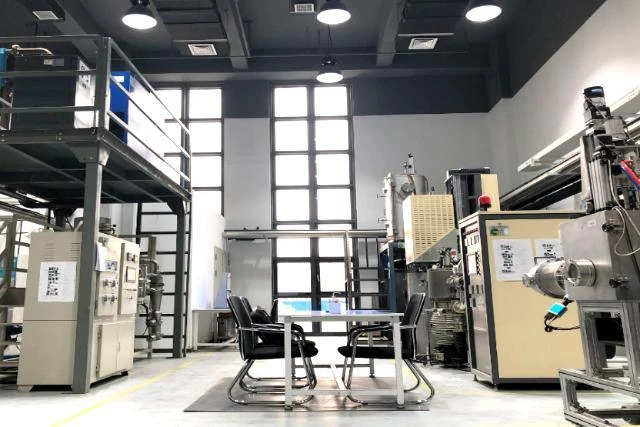
The brochure describes a materials-research team working on composition design to connect remanence, coercivity and the required thermal behaviour.
Engineering
Compare documented magnetic properties with clear units and measurement conditions. Select around the working point in your design.
Documented grade table
Values apply at the stated test temperature. Scroll wide tables horizontally.Swipe the table sideways for all properties. The grade stays visible; each row has its own test temperature.
| Compare | Grade | Test temperature °C | Remanence, Br T | Intrinsic coercivity, Hcj kOe | Energy product, (BH)max MGOe | Published max. temperature °C |
|---|---|---|---|---|---|---|
| XGS 35H | 20 | 1.18–1.21 | ≥25 | 33–35 | 350* | |
| XGS 34H | 20 | 1.16–1.20 | ≥25 | 32–34 | 350* | |
| XGS 33HB | 20 | 1.14–1.16 | ≥25 | 31–33 | 350* | |
| XGS 33HA | 20 | 1.13–1.15 | ≥25 | 30.5–32 | 350* | |
| XGS 32H | 20 | 1.11–1.145 | ≥25 | 30–32 | 350* | |
| XGS 30H | 20 | 1.08–1.12 | ≥25 | 28–30 | 350* | |
| XGS 26-T550 | 20 | 0.93–1.02 | ≥25 | 23–26 | 550 | |
| XGS 26-T550 | 550 | 0.65–0.76 | 5.0–8.0 | 9–11 | 550 | |
| XGS 25-T500 | 20 | 0.95–1.03 | ≥25 | 22–25 | 500 | |
| XGS 25-T500 | 500 | 0.65–0.80 | 6.6–9.0 | 10–13 | 500 | |
| XGS 22-TC-T350 | 20 | 0.91–0.96 | ≥18 | 19–22 | 350 | |
| XGS 18-TC-T500 | 20 | 0.85–0.91 | ≥18 | 16–18 | 500 |
Change the test temperature or clear your search to broaden the results.
Specification confirmation H-series maximum temperature differs between supplied documents: 350 °C in the grade table and 300 °C for XGS 35H in the English brochure. Request the current grade specification before design approval.
Published maximum temperature is not a universal operating guarantee. Geometry, reverse field, load line and exposure conditions determine suitability. Br = remanence; Hcj = intrinsic coercivity, not Hcb.
Materials development
Four technical capabilities described in Hangda’s supplied brochures.
01
The brochure describes a materials-research team working on composition design to connect remanence, coercivity and the required thermal behaviour.
02
Hangda’s brochure identifies oxygen-control technology as part of its SmCo materials production approach. Project requirements and acceptance limits are defined in the material specification.
03
The company describes control of high-remanence and high-coercivity phases as part of developing its Sm₂Co₁₇ material families.
04
Materials knowledge, magnetic-circuit design and component manufacture are brought together for drawing-based magnetic assemblies.
Material selection
XGS 26-T550 is published at 23–26 MGOe at 20 °C and 9–11 MGOe at 550 °C. These are separate conditions, not interchangeable ratings.
Review intrinsic coercivity, reverse field and the load line at the actual operating temperature. Evaluate geometry and thermal exposure together.
Temperature-compensated grades have a published remanence-coefficient magnitude of 0.01%/°C. Confirm the sign and applicable test interval with Hangda.
Br is remanence. Hcj is intrinsic coercivity; it is not normal coercivity Hcb. (BH)max is maximum energy product.
Engineering reference
Useful starting values for a technical discussion, not universal acceptance limits for every grade.
| Property | Direction / condition | Published value | Unit |
|---|---|---|---|
| Density | Not specified | 8.4 | g/cm³ |
| Electrical resistivity | Not specified | 90 | µΩ·cm |
| Thermal conductivity | Not specified | 10 | W/(m·°C) |
| Thermal expansion coefficient | Parallel to C-axis | 11 | 10⁻⁶/K |
| Thermal expansion coefficient | Perpendicular to C-axis | 13 | 10⁻⁶/K |
| Flexural strength | Parallel to C-axis | 110 | MPa |
| Flexural strength | Perpendicular to C-axis | 120 | MPa |
| Compressive strength | Not specified | 800 | MPa |
| Young’s modulus | Not specified | 140 | GPa |
The supplied reference table does not provide a complete mechanical-design or test specification. Discuss geometry, stresses, thermal cycling and acceptance methods with Hangda before design approval.
Open the source brochureStart a conversation
Share your drawing, working conditions and material requirements.